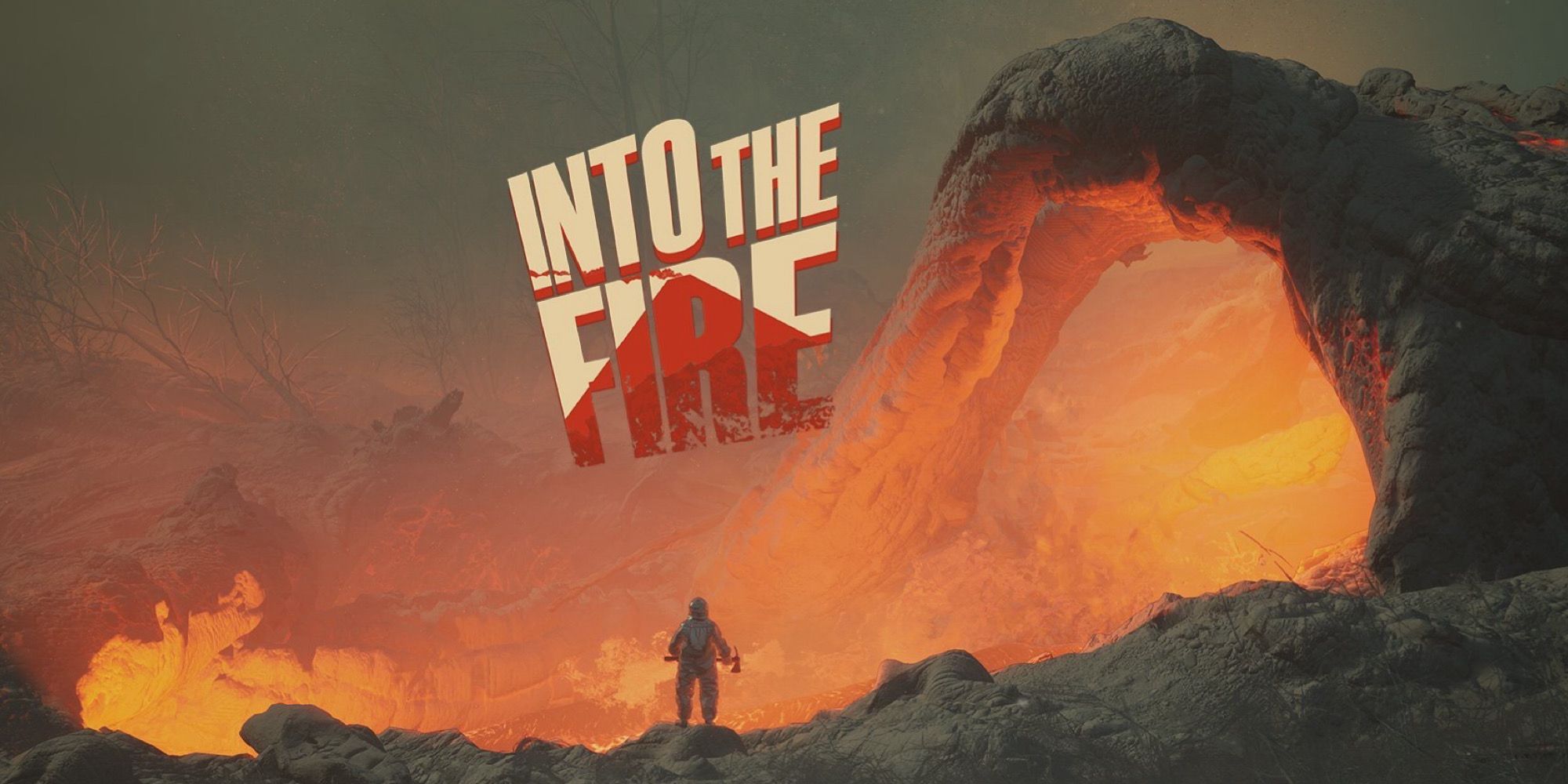
Into The Fire is the forthcoming game from Starward Industries, creators of 2023’s The Invincible. This new title is an intense, single-player experience where you’ll be thrust into the hellscape of Dante’s Archipelago, an extremely unfortunate region that’s just been caught in the explosion zone of a massive super volcano.
It’s an intense setup, but one that looks poised to have a lot of heart, mystery, and themes about humanity to unpack and explore. Take one look at the trailer, and you’ll also notice that it’s oozing with a cool, retro-future vibe that gives the game a ton of awesome style points as well.
Related
The Alters Interview: Mastering Survival Storytelling One Jan At A Time
In a sea of infinite base builders with minimal narrative, The Alters dares to be different.
Recently, I was able to connect with the minds behind Into The Fire in order to ask some questions that I had about the game after pouring through all the media and press information that’s been put out about the title thus far. After all this, I’m walking away genuinely excited about Into The Fire, and I think a lot of you will be into it, too.
In the interview below, you’ll hear from CMO Maciej Dobrowolski, Game Director Wojciech Ostrycharz, and Narrative Designer Olga Piech. If you’re ready to learn more about this promising and exciting-looking volcanic rescue title, the team shared a lot of insights below that will only get you more prepared to venture into this dangerous mission.
Interview With Starward Industries, Creators Of Into The Fire

Q: Your previous title, The Invincible, was a first-person game. What was it about Into The Fire that prompted the switch to third-person?
Maciej Dobrowolski, CMO: The switch to third-person came from a desire to enhance the player’s connection to the world and their role within it. In Into The Fire, movement and verticality play a major role—navigating unstable terrain, rushing through collapsing ruins, or performing risky rescues in dangerous environments.
Third-person perspective gives us a broader visual language to express urgency, emotion, and scale. It also lets players see their own character evolve over time, which fits thematically with the game’s survival motif and the story.
Q: You’ve said Iceland was a big inspiration for this game visually. But as a studio that seems so rooted in science fiction, is it safe to assume that Dante’s Archipelago, the setting for Into The Fire, is meant to be on another planet?
Wojciech Ostrycharz, Game Director: While the game takes place on Earth, Dante’s Archipelago is designed to feel alien—a surreal edge-of-the-world location shaped by intense volcanic activity and steeped in ancient myths. Iceland inspired us visually because it already looks like another planet: black sand, jagged lava fields, boiling rivers. The result is a setting that feels unearthly and mythological while still grounded in real-world elements.
Q: What would you consider to be some important influences of Into The Fire? Things like other video games, movies, television, books, etc.
Olga Piech, Narrative Designer: Our inspirations range from Werner Herzog’s volcano documentaries and the works of Jules Verne, to oppressive tales like The Thing and The Terror, existential philosophy from Albert Camus, and South Asian mythology. The retrofuturistic aesthetic also draws heavily from vintage scientific illustrations and archival volcanology footage.

Q: Is Into The Fire directly connected to The Invincible in any way?
Olga Piech, Narrative Designer: Not narratively, no. Into The Fire is its own universe. But thematically, both games explore how humans respond when they’re pushed beyond the boundaries of reason—be it by nature, technology, or the unknown. They share a similar philosophical DNA, just expressed through different genres and mechanics.
Q: How would you say Into The Fire marks an evolution/progression for the team?
Wojciech Ostrycharz, Game Director: It’s a big leap for us in terms of gameplay systems, scale, and tone. Into The Fire is more system-based, more dynamic, and more player-driven. It challenged us to build a world that reacts to player’s decisions in real time, and to craft a story from the ground up—without relying on source material, as we did with Stanisław Lem’s book. It also marked a deeper dive into interactivity and replayability. For the team, it’s been a journey of pushing our limits, both technically and narratively.
Q: What do you think are the benefits of releasing a game into Early Access first? Do you think there are any possible downsides to this decision as well?
Maciej Dobrowolski, CMO: For us, Early Access is a dialogue, not just a test. We’re building Into the Fire with our community—from quality-of-life improvements to balancing difficulty spikes. The upside is that we get valuable feedback directly from the people immersing themselves in the world we create. The risk, of course, is that players see an evolving version of the game that isn’t yet final. But if we’re transparent and responsive, the benefits far outweigh the drawbacks.

Q: What’s the penalty or fail-state of the game if you do not succeed in a rescue mission? Will you respawn and attempt the mission again, or is the game meant to progress forward even after failure?
Wojciech Ostrycharz, Game Director: We chose a hybrid approach. Certain mission objectives are procedurally generated and change with every playthrough, while others are fixed—failure to accomplish those carries consequences. However, it’s not only important whether players complete an objective, but also how they do it.
Imagine racing against the clock to save one more life: you discover two people trapped beneath a collapsed ceiling and must decide whom to rescue. Facing moral dilemmas, making impossible choices, and living with their fallout creates a powerfully personal, emotionally charged sense of victory or defeat—especially when the lives you save influence the narrative and gameplay long after the mission ends.
Q: Would you say the mystical creatures and phenomena are mainly inspired by a specific real-world folklore or mythology?
Olga Piech, Narrative Designer: Yes, particularly by Southeast Asian and Indonesian mythologies. The regions’ intimate relationship with volcanoes gave birth to powerful stories about gods, spirits, and rebirth. We were fascinated by the idea that natural disasters can be seen as divine messages or spiritual trials. These myths heavily influenced our worldbuilding—the volcanic demons, sacred rituals, and visions that players encounter all stem from this mix of belief, fear, and awe towards nature’s fury.
Q: How much do the dialogue options factor into the game? Are they more for role-playing purposes, or will selections directly impact/change the story and world of Into The Fire?
Olga Piech, Narrative Designer: Player choices are real decisions with real consequences, shaping the story’s progression and the evolution of your character’s stance in the face of crisis. As a rescuer, your decisions directly influence the success of missions and determine who you manage to save and bring back to the hub—often affecting the events that unfold there.
We also draw from classic RPG traditions through the ability to choose your approach to combat—whether it’s facing the elements head-on, confronting demons, or navigating danger with precision and restraint. Players can also choose how they relate to the world itself: will they surrender to its mysticism, or cling to the rational clarity of science? That tension becomes a core part of the journey.

Q: Have you discussed eventually adding any multiplayer/cooperative features to Into The Fire?
Wojciech Ostrycharz, Game Director: It’s something we’ve talked about and are open to exploring post-launch, depending on player interest and feasibility. The game is currently designed as a deeply personal, solitary journey, but the themes of trust, survival, and rescue could translate well into cooperative play. That said, any multiplayer feature would need to complement the tone and systems we’ve built—it wouldn’t be just tacked on.
Q: If players could only walk away with one thing after playing Into The Fire, what would you want it to be?
Wojciech Ostrycharz, Game Director: We’d want them to feel that Into the Fire gave them a glimpse into something deeper than survival — a sense of emotional resonance, like they faced something impossible and came out transformed. If a player walks away thinking not just “I survived,” but “I understand something more about resilience, sacrifice, or even myself,” then we did our job.
We’re making a game, but we’re also telling a story about people under pressure — not just from lava or collapsing cities, but from their own pasts, traumas, and hopes. If what stays with the player is an emotional afterburn — a reflection, a connection — then we’ve created something worth remembering.
Q: Is there anything we haven’t touched on already that you’d like to address or pass along to our readers?
Maciej Dobrowolski, CMO: Only this: we know the world doesn’t need another survival game — unless it offers something meaningful. We’re not trying to outgun or outscale the giants; we’re trying to carve out a unique space that blends heart, danger, and a bit of madness. And we invite players to keep in touch. This is a living, breathing world we’re building — and their feedback, stories, and passion will shape what Into the Fire becomes. It’s not just our game anymore. It’s theirs, too.
Wrap-Up

Into The Fire is slated to launch into Early Access at a later date in 2025. Interested players can wishlist the game on Steam today and follow along with future updates from Starward Industries.
Take a look at the game’s latest trailer to get a taste of the action to come.

Next
Interview: Bionic Bay’s Juhana Myllys Talks Indies, Physics, And Kubrick
A great inside look at making an indie platformer in 2025.

Into the Fire

- Developer(s)
-
Starward Industries
- Publisher(s)
-
Starward Industries
- Number of Players
-
Single-player
- Steam Deck Compatibility
-
Unknown