In an age where virtually every creation in digital entertainment is built on the idea of becoming a franchise, self-contained adventures are progressively rare.
We live in a time of eternal content, of stories that last forever, so I increasingly value those titles that, from conception to execution, seem virtually unimaginable to receive a sequel.
While human creativity is limitless and developers can always find an excuse to revisit an IP from the past, certain titles are less inclined to this possibility than others, either by nature or by intention.
As a fan of such video games, it’s a bittersweet sensation to feel like I’ll never see anything from their worlds again, but as a follower of interactive art, these ten amazing games that have made a sequel seem impossible are gems I will treasure until the end.
10
Signalis
Designed for Ambiguity
I like to describe Signalis as Resident Evil meets NieR: Automata, and the latest influence prevents me from even contemplating a successor for the game.
Primarily, given it’s a fascinating fusion that works masterfully and is among the best indie horror titles of all time, which is in itself quite difficult to replicate, but also due to its very conception, as the adventure is designed with a specific level of ambiguity.
Rather than attempting to develop a universe or explain a story beyond what’s shown, Signalis relies as much on player interpretation as on Elster’s specific journey. The appeal of the experience lies in the emotions, not the explanations.
It’s difficult to imagine a sequel to it because it’s a robust creation that needs no improvement, and its special nature arises from the presence of the unknown and, consequently, the embrace of the little that is familiar.
If we knew more about the game world and had more tools to deal with its threats, which would be a side effect of the expansion drive that sequels have, Signalis wouldn’t be the same, so it’s both unlikely and undesirable.
9
Journey
A Once-in-a-Lifetime Experience

I’m one of those who played Journey many years after its peak, and despite knowing all the hype surrounding it, it still surprised me immensely.
When playing video games, I’ve always thought we make certain concessions based on expectations, so it’s possible to overlook aspects we probably wouldn’t let go so easily in other projects.
With Journey, I think this is especially true because, from its length to its mechanics and narrative, it was a completely atypical work that set the standard for dialogue-free games, leaving us speechless with its uniqueness.
Trying to expand the game’s universe, whether through its gameplay or the story it presents, would be to sully the very message it sends, dedicated to conveying the importance of closing cycles and valuing the lessons of time.
It doesn’t need a successor, nor could it have one: Journey is an unparalleled experience to which an attempt to give more than it has already given would be fruitless, and would probably displease more than it would delight.
8
Furi
Boss Rush Perfection

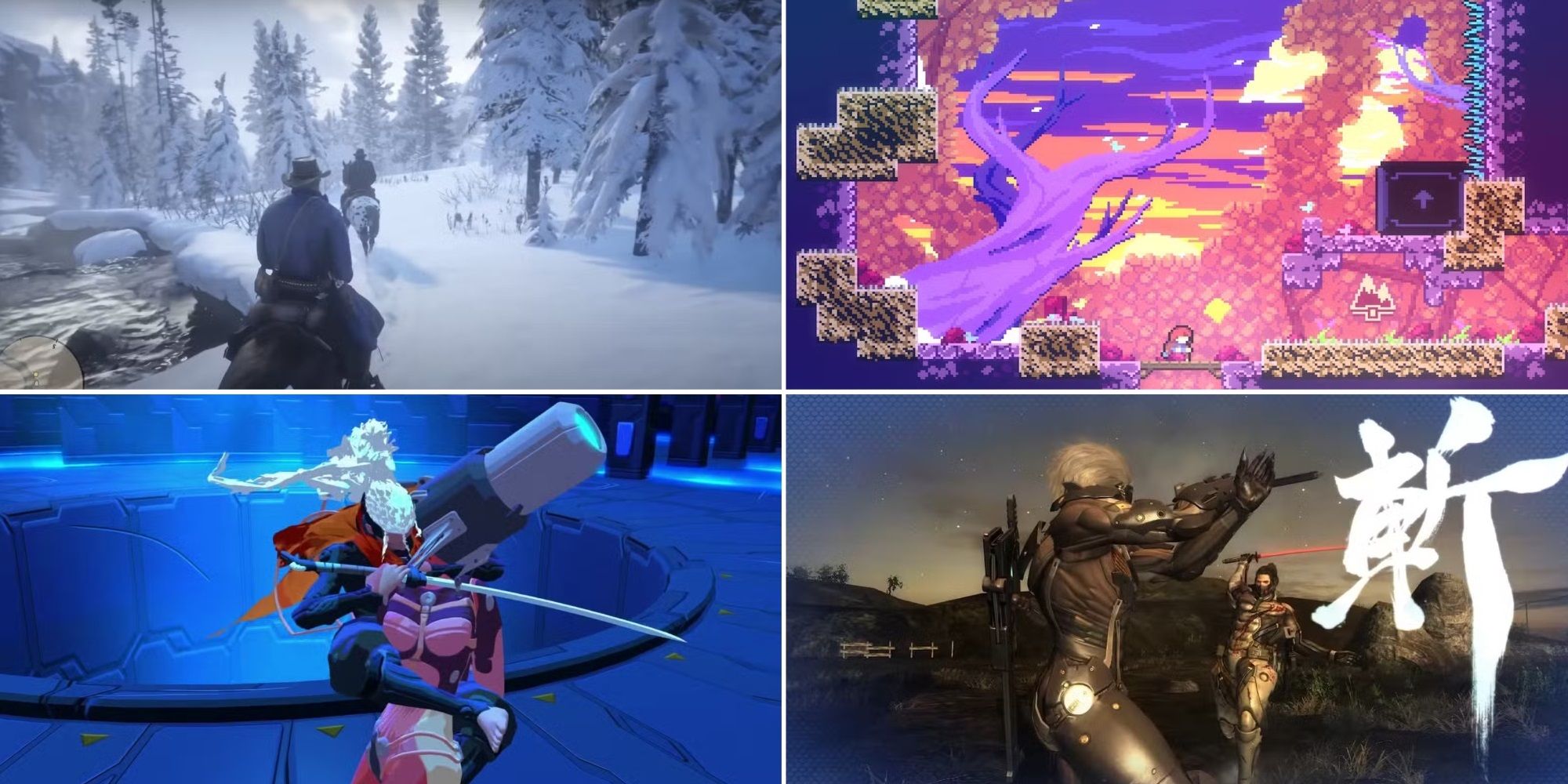
Furi is a video game with such perfect gameplay that it makes me wish it had as many sequels as humanly possible, but my truest self hopes it never happens.
The Stranger’s entire adventure is contained within this installment, and while it could easily support a whole series thanks to the incredibly developed combat, creating a boss roster with such a high average level doesn’t seem achievable.
From the first encounter to the final conflict, especially considering the dialogues with The Voice that occur between fights, Furi is a title curated down to the last detail, presenting a crescendo of gameplay and storytelling that reaches its climax at the most opportune moment possible.
The outcome of all the characters, like all the duels, is so precise and rounded that surpassing it is simply not feasible, especially regarding consistency. Furi 2 would have the disadvantage of having a predecessor that’s flawless on most fronts, so its mere existence would be a mistake (which I would love to play, all things considered).
Memes Are Timeless

Basically, every ounce of my being cries out for a sequel to Metal Gear Rising: Revengeance like there’s no tomorrow, but it’s a game whose beloved status was only possible due to its context.
The coincidence of PlatinumGames’s prime development of hack-and-slash games and the rise of memes as a central communicative medium in a digital age is the cornerstone of a title that evolved into an icon due to the zeitgeist.
Unmistakably, the game is a masterpiece, with immaculate gameplay that gives you an unparalleled power fantasy and a truly engaging and thoughtful story, but the social phenomena that led it to become so relevant in the collective imagination will never be repeated.
Despite its circumstances not being the result of coincidence, as it achieved relevance primarily because it is an exceptional title and one of the best in the history of its genre, Metal Gear Rising: Revengeance can never be surpassed, even if it gets improved, and I believe PlatinumGames itself is aware of this.
6
Inscryption
An Unrepeatable Surprise

Video games that depend entirely on your knowledge of their premises to subvert them and make you feel a magical experience have a fundamental problem: the same trick doesn’t work twice.
Inscryption perfectly reflects this description, spending dozens of hours making you believe you know what’s going on, only to prove you wrong on a gameplay, narrative, and audiovisual level, sustaining the act until the very end.
As a result, Daniel Mullins’ latest piece is among the greatest indie games ever created, the kind of experience that makes you realize the true potential of video games, but also an unreplicable creation.
A sequel wouldn’t only contradict its predecessor but would also face a gaming community acutely aware of its ability to upend expectations, dealing with an audience on the defensive to practically irrevocable magnitudes.
And even if that weren’t the case, Inscryption is only experienced once in a lifetime. Neither replaying it nor playing a second installment would be able to generate even a tenth of the original playthrough, so there’s no point in trying.
5
Prey
The Glory of Immersive Sims

The life of supporting Prey as an extraordinary and underrated adventure is lonely, but it’s well worth it if it means recognition where it’s due.
Immersive sims have been punished with oblivion over the past few years, but the Talos I is one of their greatest and most impregnable modern bastions, reminding us of the genre’s immeasurable potential.
The game’s open ending might suggest it should receive sequels, but I couldn’t disagree more. While Prey isn’t as revolutionary as System Shock or as fresh as BioShock, it’s a self-contained gem whose legacy should only extend through other worlds.
Certainly, the title is presented as a reboot of the IP, so it’s assumed to mark the beginning of a new mainline, but Dishonored and Deathloop point the way forward: same laws, different enforcers.
Prey‘s weapons, level design, enemies, and characters are all beyond improvement, so rather than trying to give it a sequel, it’s better to learn from its lessons to replicate its feel, not its identity.
4
Celeste
There Are No Bigger Mountains

Indie titles tend to be the ones that most evoke in me the idea that they can’t receive sequels because, without the presumption of turning everything into a franchise, their creators tend to invest all their ideas in a single project.
Among the numerous examples I could cite, Celeste is one of the most powerful because Madeleine’s journey, including its additional chapters, gives you everything you could want from a platformer.
The mechanics are satisfying, precise, and evolve over time; the levels are easily distinguishable and feature unique concepts; the story is engaging, and you really connect with its characters; the soundtrack is perfect for what it seeks to represent… How to improve Celeste is a question I don’t even ask myself because it has no answer.
The only thing I genuinely consider possible is to redo what the first game did, but it’s hardly feasible to think Maddy Makes Games would develop a successor without believing they could improve on the original game, which is already perfect in itself.
No more levels, no new ways to navigate, and no more fiendishly difficult challenges with screens longer than a movie can ever capture what Celeste, the pinnacle of its genre, achieved, so it’s better to think about climbing a different mountain than that.
3
Red Dead Redemption 2
The Age of Outlaws Is Over

When a game reaches such an absurd level of refinement as Red Dead Redemption 2, I can’t help but feel relieved to be out of Rockstar’s shoes, as I don’t have to figure out how to continue beyond that.
Considering its advanced technical level, its glorious writing and narrative execution, and the spontaneous worldbuilding that underpins the greatest Western video game in history, you just have to hang up your gloves and look backward proudly.
Certainly, Red Dead Redemption 2 is an excellent action title that has room for improvement in terms of gameplay, but I don’t know the first person who decided to accompany Arthur Morgan just to shoot bandits and manage the camp’s resources.
On the contrary, the demise of the outlaw era is a story you live, riding leisurely while appreciating the most detailed open world ever created, visiting Valentine after wasting an hour hunting a legendary animal that never appeared, and insulting Micah for existing.
Surely technology will advance enough for Red Dead Redemption 3 to revolutionize the series and the genre again, but if it does, it will be many years away, and I doubt it will have the same impact.
2
Bloodborne
An Immaculate Circle

Bloodborne is probably the most flawed title on this list, but even with its numerous areas of improvement, Yharnam can’t be visited twice.
The framerates, healing system, base game bosses, and online experience are all components whose quality could be improved, and yet, Bloodborne can’t be experienced twice.
The sensations of seeing your first Amygdala or the exhilarating pleasure of your first visceral attack after a satisfying parry transcend the game’s technical shortcomings, which are as numerous as they are irrelevant in the grand scheme of things.
I find it difficult to complain about entering a boss fight with 18 vials of blood instead of 20 when I’m listening to a superb orchestra while dueling with a cosmic god whose lore is so captivating and tragic that it makes me want to hug him instead of slaying him, if I’m being honest.
I definitely could just enjoy the trick weapons again and watch FromSoftware further explore Lovecraft’s mythology, but I don’t need to. Bloodborne expands on a cosmic level yet remains closed in on itself, and nothing speaks more to its greatness than that.
1
Outer Wilds
Unique, Unmatched, and Eternal

I knew it before I started writing, and you knew it before you started reading: there’s no better way to close this article than with Outer Wilds, the quintessential “you can’t replay this”.
Structurally, the title relies on your ignorance of its rules, functioning, and secrets to create one of the century’s most natural, refreshing, engaging, and captivating adventures; thus, it can’t be repeated.
Even if Mobius Digital makes a pact with some supernatural entity and manages to replicate the sensations with universal laws different from those of the Outer Wilds galaxy, there’s no way to re-impress a community of players who have been changed as people precisely because of the first title.
Understanding how the Hourglass Twins work, entering your first black hole, discovering the Eye of the Universe, finally stumbling upon the quantum moon, or entering The Stranger are emotions you’ll never experience again, so you might as well stop looking for them.
Truth be told, not only will you never relive them, but no one will ever recreate them. Outer Wilds is a one-in-a-million phenomenon, and while I expect some games to improve upon it over the years, none of them will match it, especially with so many conscious observers watching.