
company refuse severance pay
When an employee is laid off or their employment is terminated, severance pay often becomes a key topic of discussion. Many workers wonder, can a company refuse Severance Pay? The answer to this question is not always straightforward and depends on a variety of factors such as the terms of the employment contract, company policies, labor laws, and the circumstances of the termination.
Severance pay is typically offered as compensation to employees who lose their jobs involuntarily. It is meant to help ease the financial transition while the employee searches for new employment. However, severance pay is not automatically guaranteed in every situation. Unlike wages or final pay, which are legally required to be paid for work already performed, severance pay is often discretionary unless it has been explicitly promised in an employment contract or mandated by law.
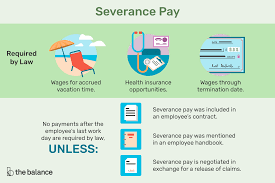
In many cases, whether a company can refuse severance pay depends largely on the agreement between the employer and employee. If the employment contract or company policy clearly states that severance pay will be provided upon termination, then the company is usually obligated to pay it. Refusing severance pay in such cases can lead to legal disputes or claims of breach of contract. Employees should carefully review any agreements they have signed and check the company’s employee handbook or severance policy to understand their rights.
Can a company refuse severance pay?
On the other hand, if there is no contract, collective bargaining agreement, or company policy that promises severance pay, an employer may choose to refuse severance pay. Many companies provide severance pay as a goodwill gesture or to reduce the risk of litigation, but it is not always legally required. In jurisdictions where severance pay is not mandated by labor laws, employers have more discretion to deny it.
The reason for termination also affects whether severance pay can be refused. If an employee is terminated for cause, such as misconduct, violation of company rules, or poor performance, the company may have valid grounds to refuse severance pay. Employers often include clauses in employment contracts that severance pay will not be granted if the employee is fired for cause. In contrast, employees laid off due to business closures, downsizing, or restructuring are more likely to be entitled to severance pay, particularly if local laws or contracts require it.
It is important to note that severance pay is different from final pay or earned wages. While final pay must be given regardless of the reason for termination, severance pay is more conditional. For this reason, an employer can refuse severance pay if the employee voluntarily resigns, unless otherwise specified in the contract.
Additionally, some companies may refuse severance pay if the employee fails to comply with certain conditions. For instance, severance agreements often require employees to sign a release or waiver of claims, agreeing not to sue the employer in exchange for the severance payment. If an employee refuses to sign such an agreement, the company may refuse to provide Short service executive wrongful dismissal large severance.
In summary, a company can refuse severance pay in certain circumstances, particularly if there is no contractual or legal obligation to provide it. Reasons for refusal may include termination for cause, voluntary resignation, or failure to meet conditions outlined in severance agreements. However, when severance pay is promised by contract or law, employers generally cannot refuse it without risking legal consequences. Employees should carefully examine their contracts, company policies, and local labor laws, and seek legal advice if necessary, to understand their entitlement to severance pay and protect their rights.


