
flexible PCB boards be repaired or modified after production
Flex PCBs are a type of printed circuit board that is designed to be flexible and able to bend and fold. This makes them an ideal choice for use in a variety of electronic devices that may need to adapt to a number of different shapes. This flexibility also allows the flex PCB to absorb vibrations and shocks, which can contribute to the durability of the device it is used in. This type of PCB is also lighter and thinner than a traditional rigid PCB, which makes it easier to transport and install.
A flex circuit is built using a base material called a dielectric substrate film, which can be made of polyimide or other types of plastics. A thin layer of copper foil is then placed over this to serve as the conductors. Then, a layer of dielectric insulation is laminated on top of the conductors. This can be a polyimide film or another type of plastic such as Kapton. Acrylic or epoxy adhesive films can then be applied to the surface of the flex circuit for bonding purposes.
Once the flexible pcb board has been fabricated, it is then ready to be shipped to customers for use in their products. A final inspection process is conducted to ensure that the flex PCB is free of faults and is capable of working properly in the final product. In addition, a quality control program is put in place to ensure that all the required components are present on the flex PCB.
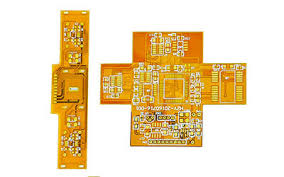
Can flexible PCB boards be repaired or modified after production?
Despite the high quality of the components used in a flex PCB, there are a few potential issues that can occur after production and use. One common issue is physical damage. This can be caused by a number of factors, such as the PCB falling off the production line and breaking, or the component itself sustaining significant physical damage. Another possibility is that the traces on the circuit board have deteriorated over time, which can lead to poor connectivity. To prevent this, it is recommended to use curved traces rather than straight ones whenever possible. They are less likely to break than angled traces, and they can also be connected with teardrop (pad fillets)-shaped vias, which reduce the likelihood of stress concentration spots.
If physical damage occurs, the flex PCB can be repaired or modified by an experienced professional. This usually involves remodeling and resoldering the circuit board, as well as the removal of any broken components. In some cases, the physical damage can be so severe that the circuit board will need to be completely remanufactured.
There are many ways that a flex PCB can be improved during the manufacturing process to increase its lifespan and reliability. The most important way is to make sure that the flex PCB is designed with the right materials. This means that the PCB should be modeled with accurate material properties, such as temperature resistance, moisture tolerance, chemical resistance, and shock & vibration tolerance. The design should also take into account factors such as bending radius, thermal expansion, and conductive path length. The use of localized stiffeners, which are strips of rigid material attached to a flex PCB, can also help to extend the life of the circuit board.
