Beauty and fashion content creator Alina Hasan Rizvi was pleasantly surprised to hear a friend talk about facial fat grafting. She visited a dermatologist to ask about vanishing her unseemly dark under-eye circles and other facial issues.
“The dermatologist told me I would need facial fat grafting in that area—if not now, then definitely in the future—to prevent hollowness and the formation of deep shadows. I wouldn’t have expected someone my age to go in for such a surgery,” says Rizvi, adding, “Maybe I’ll think about it in my late 20s.”
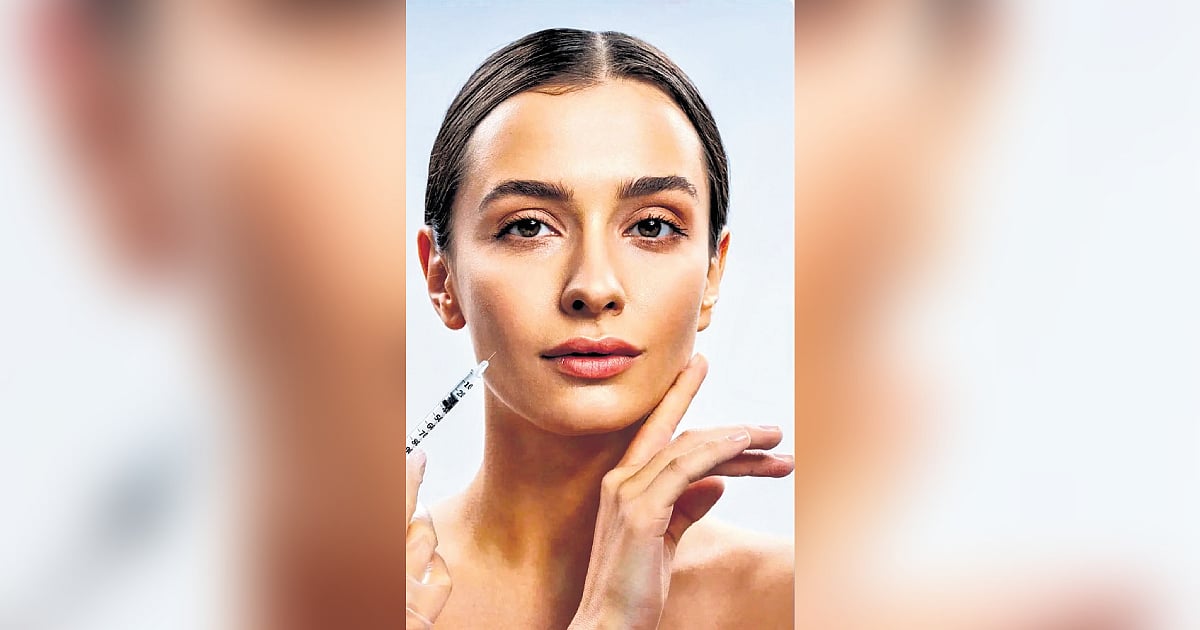
More people are choosing fresh, youthful and less defined features over sculpted and snatched looks that define the angularity of the face. They are injecting fat taken from other parts of the body into their faces.
“Facial fat grafting, also known as autologous fat grafting or transfer, is a popular cosmetic procedure designed to restore a youthful appearance,” explains Dr Neha Yadav, head dermatologist at the Inara Skin App, an AI-powered app developed by Tagbin.
“This surgical procedure involves harvesting fat from one area of the body, purifying it, and carefully re-injecting it into areas with volume loss, such as the cheeks and undereyes.” She says that it offers safe and long-lasting results and is an effective solution for those aiming to rejuvenate their facial contours.
OLD IS NEW
Though the trend is only picking up now, it was first performed in the late 19th century, by German plastic surgeon Gustav Neuber who transferred fat from a patient’s arm to the area around the eyes to improve scars formed by osteomyelitis, a bone infection. The procedure was also used to establish symmetry in the breasts after a mastectomy. However, fat grafting didn’t truly gain acceptance till the ’90s, when the techniques for fat extraction, processing, and injection began to be standardised.