
Ensure Model Stability in AI Applications
Ensuring model stability in AI applications is crucial for maintaining consistent performance and reliability over time. Model stability refers to the ability of an AI model to produce reliable outputs across different conditions, datasets, and deployment environments. Without stability, an AI model may exhibit erratic behavior, degrade in performance, or become unreliable when exposed to real-world variations. Achieving stability requires careful attention to data quality, model training techniques, evaluation strategies, and ongoing monitoring.
One of the key factors in ensuring model stability is the quality and consistency of the training data. AI models rely on data to learn patterns and make predictions, so any inconsistencies in the dataset can lead to unstable performance. Data preprocessing techniques such as normalization, handling missing values, and removing outliers help improve data quality and ensure the model learns from reliable information. Additionally, maintaining a diverse and representative dataset prevents the model from overfitting to specific patterns that may not generalize well to new data.
Regularization techniques play an essential role in preventing overfitting, which is a major cause of instability in End-to-end testing platform for Al applications. Overfitting occurs when a model learns the noise in the training data instead of the underlying patterns, leading to poor generalization on unseen data. Methods such as L1 and L2 regularization, dropout, and batch normalization help control model complexity and improve stability. Dropout randomly deactivates neurons during training, ensuring that the model does not rely too much on specific features, while batch normalization stabilizes learning by normalizing activations across mini-batches.
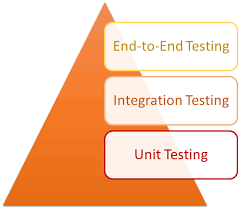
How Do You Ensure Model Stability in AI Applications?
Hyperparameter tuning is another critical aspect of ensuring model stability. The choice of hyperparameters, such as learning rate, batch size, and optimization algorithms, significantly affects the model’s ability to converge and remain stable during training and inference. Techniques like grid search, random search, and Bayesian optimization help find the optimal hyperparameter values that lead to consistent model behavior. Gradual learning rate adjustments and adaptive optimizers, such as Adam or RMSprop, further enhance stability by preventing sudden fluctuations in learning.
Robust evaluation methods are necessary to test model stability under different conditions. Cross-validation ensures that the model is tested on multiple subsets of data, reducing the risk of overfitting to a particular dataset split. Stress testing, where the model is evaluated on edge cases, noisy data, and adversarial inputs, helps identify potential vulnerabilities. Additionally, testing the model across different computing environments and hardware configurations ensures that it performs consistently regardless of deployment conditions.
Continuous monitoring and retraining are essential for maintaining model stability over time. AI models deployed in real-world applications can experience data drift, where the statistical properties of incoming data change over time. Setting up automated monitoring pipelines to track key performance metrics allows early detection of stability issues. When performance degradation is observed, retraining the model with updated data ensures it adapts to changing conditions while maintaining stability.
By focusing on data quality, regularization, hyperparameter tuning, robust evaluation, and continuous monitoring, AI practitioners can ensure that their models remain stable and reliable across various scenarios. A stable model is essential for building trustworthy AI applications that deliver consistent and accurate results in real-world environments.