
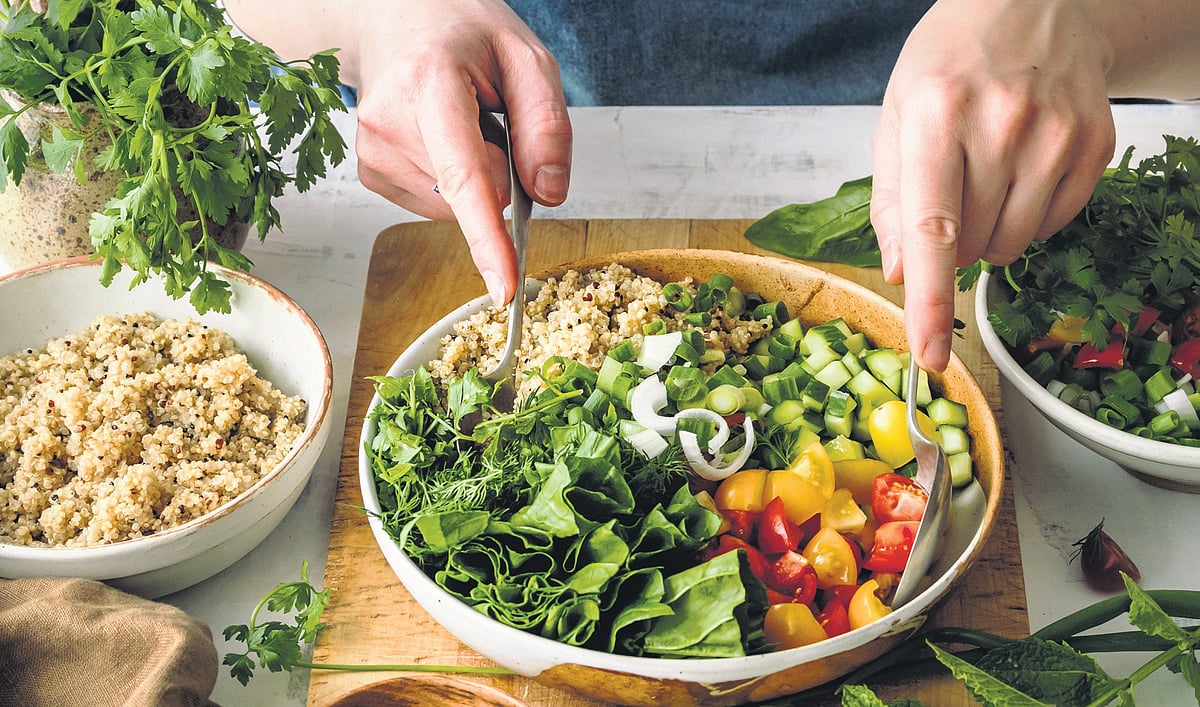
The latest buzz on social media has turned 30 into a magic number. If you’ve been scrolling through health trends lately, chances are you’ve stumbled on the idea that eating 30 different plant-based foods a week can transform your gut health and extend your lifespan. But is there real science behind this, or is it just another wellness fad?
The Beginning
It all started when Professor Tim Spector, a genetic epidemiologist at King’s College London, suggested that consuming a variety of plant-based foods could boost gut health. His ‘30 plants a week’ mantra went viral on the internet and turned into the next big health hack. While the concept of dietary diversity is beneficial, does hitting this specific number truly unlock longevity? According to experts, the connection isn’t as straightforward as it seems.
What Science Says
There’s no denying that a diverse diet promotes a healthy gut microbiome, which can have a ripple effect on overall well-being. However, Kavita Devgan, dietician & author, believes that focusing on a number like 30 is arbitrary. She says, “Diversity in diet is good, but chasing the ’30 plants a week’ goal can be excessive and unsustainable for many. Instead of complicating things, focus on gradual variety rooted in moderation and nutrition.”
The Challenges
While the 30-plant rule may work well for some, it might not suit everyone. People with busy schedules, dietary restrictions, or digestive conditions like IBS may find it challenging to incorporate such variety in their routine. Small, sustainable changes, such as adding new vegetables to familiar dishes or experimenting with different grains, can be just as beneficial.