
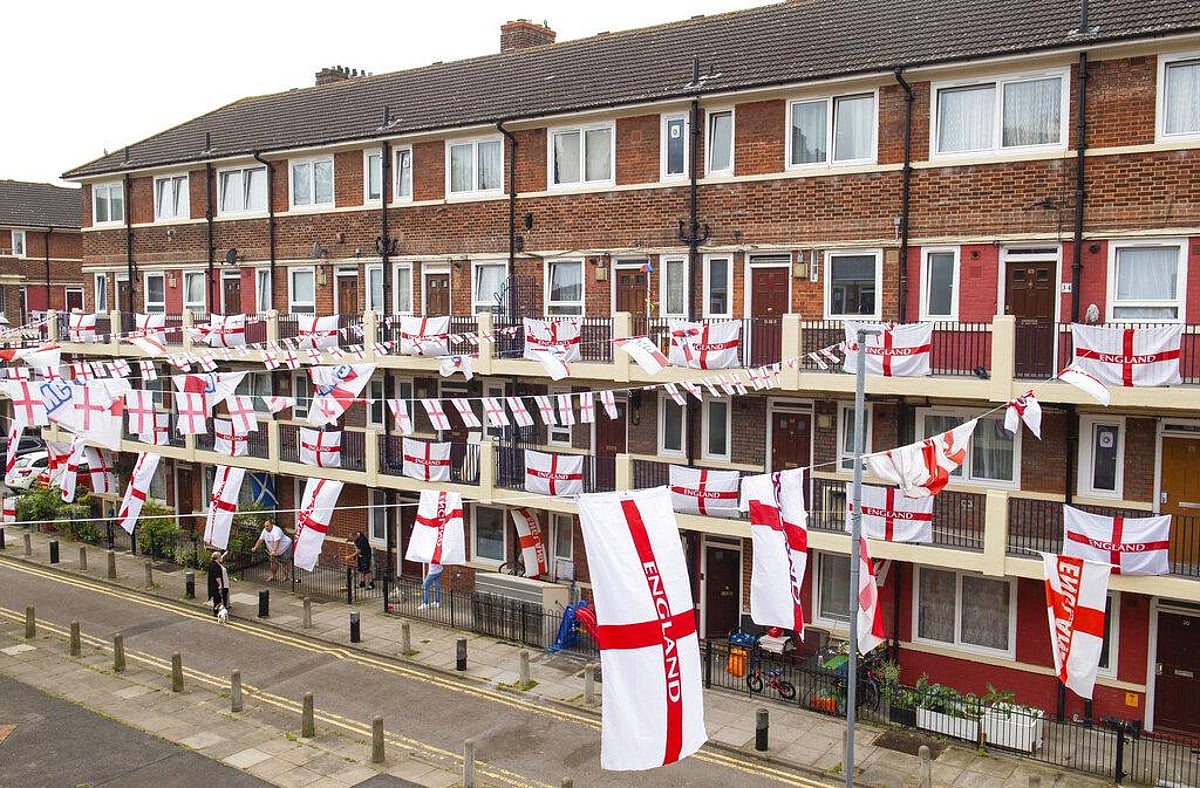
BOURNEMOUTH: The recent proliferation of English flags, from lampposts to roundabouts, can be viewed as more than a simple act of patriotism.
It could be argued that it is an expression of deep-seated national anxieties. Hanging these flags may function as a public psychological defence against a world perceived as increasingly complicated.
Against this uncertainty, a flag is a simple, bold symbol.
It provides a stark distinction between us and them, potentially allowing for a sense of order and belonging.
Flags may help us manage what the psychoanalyst Melanie Klein called persecutory anxiety — the fear that we are being pursued or attacked.
When we feel overwhelmed by forces such as economic instability, social change or a health crisis, we do what we can to cope. We may, for example, resort to a primary psychological defence known as splitting.
This is a process in which we divide the world into two camps: the good and the bad.
The flags, in this sense, can become a public object onto which we project our anxieties.
Those who choose to put up the flag in public spaces may feel a part of the good, authentic, local group and feel the need to differentiate themselves from external bad forces, such as unseen globalist elites, the woke mob, or anyone who is offended by their flag.
These forces are perceived as being linked to the person’s problems.
Psychoanalyst Donald Winnicott developed a concept called a transitional object to describe the crutches we use in times of anxiety.
When a child is moving from a state of total dependence on their primary caregiver as a baby to a state of recognising themselves as a separate person, they often become intensely attached to a teddy or other toy.
The teddy is an object they keep with them that reminds them of their infancy as they move into a new, unknown state, and becomes an omnipotent extension of the inner psychic world.
In the same way, a flag is a physical item that people can hold on to.
It provides a feeling of stability and continuity and a reminder of a more stable past as we move into an uncertain future.