When it comes to bucket list gaming events, one of those that you need to cross off that list at some point is Gamescom. A monumentally big gathering of fans, media, traders, and exhibitors in the heart of Europe that has all but replaced E3 since its demise years ago.
It’s not only a place where new games are announced live in abundance. It’s also a place where fans and media co-exist, a place where you’re never short of something to do to connect with the beloved pastime of gaming, and it’s a place where there’s so much going on that you couldn’t possibly hope to see everything.
My time this year at Gamescom was a fun, productive, and fulfilling time, allowing me to connect with some of the best and brightest in the industry while also being able to do it shoulder-to-shoulder with the fans who make it all possible.
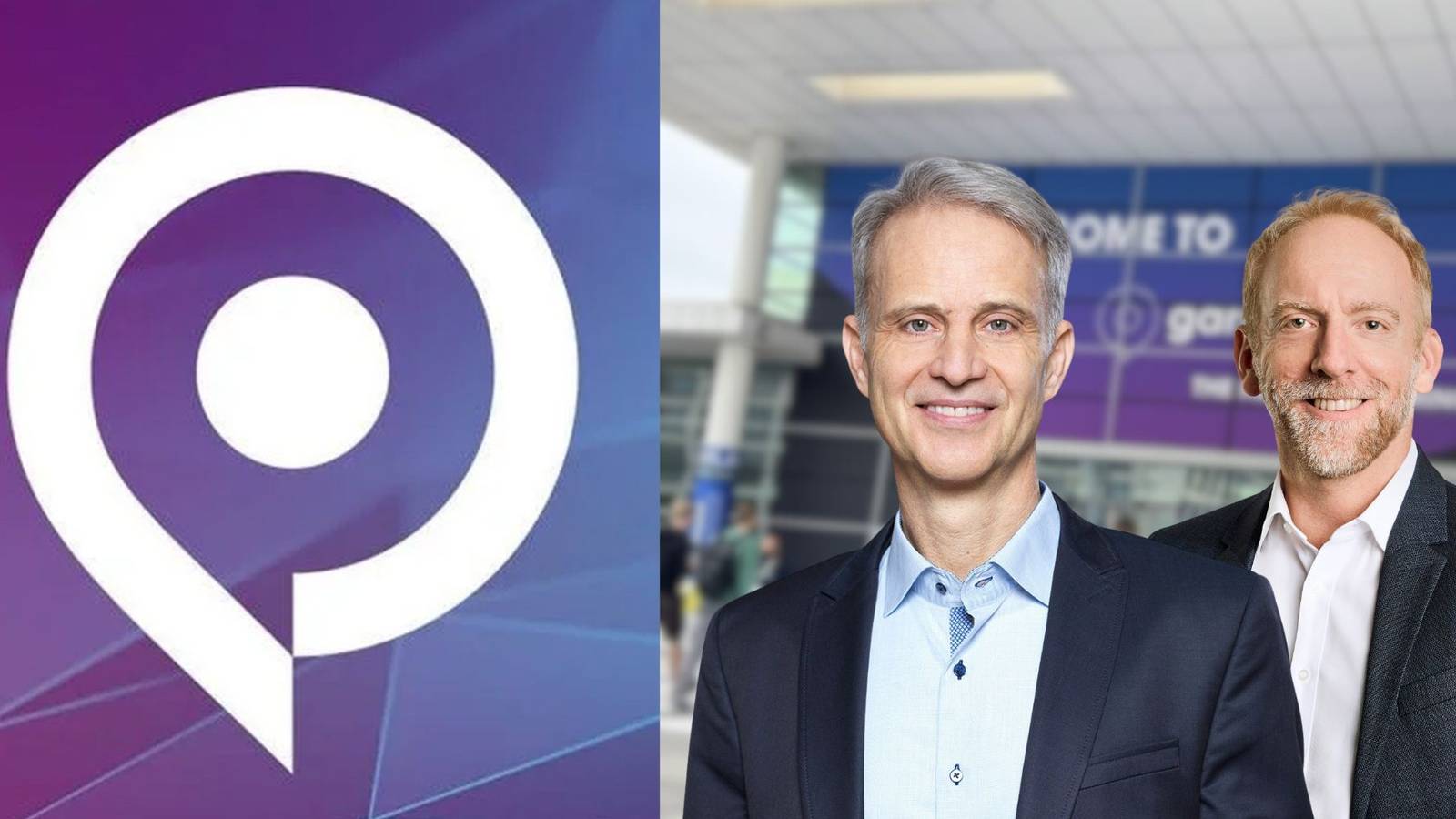
It’s hard to quite put your finger on what makes Gamescom quite so special, but in an attempt to do so, I sat down with Tim Endres and Stefan Heikhaus, two directors and major players in the setup of Gamescom as a whole. Who were kind enough to spill the beans on the past, the present, and the future of Gamescom.
Q: Gamescom has always called Cologne home. What is it about this place that makes it the ideal venue for Gamescom?
Stefan Heikhaus: Cologne is the perfect home for gamescom for several reasons. Right in the heart of Europe, the city is easy to reach from anywhere in the world. At the center of it all is Koelnmesse: a venue that not only has the space an event like gamescom needs, but also state-of-the-art facilities for every part of the event – from the buzzing entertainment area and the spectacular event arena to the focused business area.
We’re also backed by strong partners: the City of Cologne and the state of North Rhine-Westphalia, both major hubs of the games industry. Together, we make sure every guest enjoys their visit with smooth public transport, special shuttle services, enhanced security, and a wealth of accommodation and cultural highlights. And then there’s the atmosphere: Gamescom in Cologne is a city-wide celebration. With the gamescom city festival and countless activities, Cologne transforms into the gaming capital of the world, where the spirit of gamescom can be felt everywhere.
Q: Gamescom has been around for well over a decade now, playing host to some of the biggest names in the industry and being the stage where many huge projects are announced. How does the setup today differ from what existed back in 2009, and what innovations are you most proud of?

Tim Endres: Compared to its 2009 debut, Gamescom today is bigger, more international, and far more diverse. Back then, we welcomed around 228,000 visitors on 120,000 square meters. In 2025, we built on this number, reaching 357,000 visitors on 233,000 square meters, with a record of more than 1,500 exhibitors. What once focused mainly on classic game booths has evolved into a games culture festival– bringing together AAA and indie announcements, cosplay, esports, board games, creator meet-ups, and business networking – while remaining one of the world’s most important stages for hands-on experiences.
We’re proud that this transformation has been shaped hand in hand with our communities and industry partners. Just to name a few examples: Gamescom Opening Night Live, established in 2019, now reaches over 40 million viewers worldwide. Both launched in 2024 are two additional highlights: The cards & boards area caters to tabletop and trading card enthusiasts, and the social stage, which features exclusive moments with some of the biggest content creators. Our digital formats, such as Gamescom Epix and Gamescom Awesome Indies, have expanded global participation even further.
And with the opening of the new Confex congress and conference center, both the Devcom developer conference and the Gamescom congress have reached an entirely new level. And these are just some of the developments that have shaped Gamescom’s journey. At its core, it remains what it was in 2009: a place where the global gaming community comes together. But now it’s bigger, more connected, and more colorful than ever.
Q: This year’s event had a fantastic line-up. I know you won’t likely want to play favorites, but what would you say were some of the most exciting things fans and media got to experience this time around?
Tim Endres: What I can say is that with this year’s growth to an additional hall for the entertainment area, the biggest indie area to date, and the overall growth in size to 233,000 square meters, we can see one trend for sure: The diversity the event brings to the table. What we will see at this year’s event isn’t just a specific genre, but it is the full variety gaming has to offer. This year’s event is going to be more versatile and diverse than ever before. It truly is an image of what makes gaming so special. We will see the full range from AAA blockbusters to hidden indie gems.
Q: How important is it that Gamescom remains an event where fans, developers, publishers, and the media intertwine? As it’s not something you always see at other events like this?

Stefan Heikhaus: It’s central to Gamescom’s identity that communities, developers, publishers, media, and other industry players all come together in one space. On the fan side, visitors can try new releases, meet creators, or explore niche interests such as cosplay, anime, tabletop games, and trading card games. On the industry side, thousands of developers, publishers, and journalists network in our business area, digitally via Gamescom biz or in formats like Devcom, Gamescom Congress, or the Gamescom invest circle.
Digitally, Gamescom’s hybrid model extends this connection worldwide through shows like Gamescom Opening Night Live and Gamescom Awesome Indies. We believe separating public and trade would weaken the event. It is the combination of all, the shared spaces and experiences, that make it the world’s largest games festival.
Q: With events like E3 effectively falling off the face of the earth in recent years, what has Gamescom done to ensure that the event remains relevant, successful, and recurring year-on-year?
Tim Endres: There are three major things that I would like to point out: One is that our hybrid approach started in 2019, even before the pandemic started, with the first iteration of Gamescom Opening Night Live. The second reason is that we never paused Gamescom, not even during challenging times. In the pandemic, we successfully transformed it into a fully digital event, launching additional digital formats such as Gamescom Awesome Indies or the Gamescom Studio. These innovations are now part of a hybrid model, bringing hundreds of thousands of fans to Cologne and millions more together online worldwide.
The third point is that each year, we evolve Gamescom based on direct feedback from our community and industry partners. In 2024, for example, we introduced new features like the cards & boards area and the social stage. And this year, we are moving the event arena to Hall 1. With our events, Gamescom Asia X Thailand Game Show and Gamescom Latam, we’re expanding our footprint in Asia and Latin America. This combination of constant innovation, global networking, and our commitment to showcasing the full spectrum of gaming culture ensures that Gamescom remains indispensable.
Q: Gamescom is always an event that champions Indie Gaming, with a huge portion of the event dedicated to spotlighting the ‘little guys’. How important is it to continue this trend of giving indies a platform, and are there any projects you would like to highlight that will be taking to the floor this year?

Stefan Heikhaus: Indie games are an essential part of gamescom’s DNA. This year, we are proud to present our biggest indie area yet. Visitors can therefore look forward to a host of exciting indie highlights. We actively support independent developers by providing dedicated spaces and affordable booth packages, as well as the show’s Gamescom Awesome Indies, which spotlights outstanding titles to a global audience. Beyond the show floor, formats such as the Devcom developer conference, the Gamescom Steam event, and our business matchmaking platform, Gamescom Biz Connect, provide indie creators with direct access to content creators, media, and industry professionals, offering them the visibility and networking opportunities they need to grow.
What I cannot do, though, is to pick a highlight or favorite. Because what makes indie games so special is the creative variety they offer. What might be a highlight to me does not have to be a highlight for everyone else. And that is the nice thing about indie games – there is something for everyone.
Q: As an extension of this, Gamescom really does aim to be more than just a gaming expo, but more of a celebration of the industry and the medium as a whole. What aspects of the programme and the make-up of the event do you feel best showcase that holistic approach?
Tim Endres: The holistic approach of Gamescom really comes through in how every part of the program fits together to give a complete picture of gaming culture. It covers the full spectrum – from blockbuster AAA titles and a thriving indie scene to esports tournaments and live music in the event arena, plus the creativity of the cosplay village and cosplay contest, the artist area, and the merchandise area.
Visitors can meet content creators in the signing area, and we’ve also created spaces for families and younger visitors, like the retro & family area, so that every generation can enjoy games and gaming culture in their own way. Our partners add even more variety, with activities such as sports and other interactive experiences. And of course, the city festival takes the celebration beyond the venue into the heart of Cologne, with concerts, street performances, and food courts.
Q: A hard one to finish off. What would you say is the ultimate Gamescom moment that defines the event in its entire history?
Stefan Heikhaus: For me, one of the ultimate Gamescom moments is that point when you can truly feel this special festival atmosphere. You can feel it in the event arena during Gamescom Opening Night Live, seeing thousands of people in front of me sharing the same excitement about what’s to come. It’s walking through the halls, surrounded by fans from over 100 countries, hearing the buzz of conversation and laughter, watching gaming friends meet in real life, creators connecting with their audiences, cosplayers stopping for photos, and so much more. It’s our community’s homecoming every year.